Recipes and glass chemistry
Versioned recipes, raw material master data, oxide and redox calculation, glass physics and recipe optimisation.
For running production · reference version
Batch management for container-glass production, designed for furnaces pulling 150 to 600 t/d: from batch sheet through silo and batch log to the daily log, with the shift book as the everyday workplace.
In container-glass production every step builds on the one before. A recipe version applies, a batch sheet goes to the scale, consumption comes off the silo, oxide and redox have to suit the furnace, the shift hands over, and the day is closed. If one link is missing, there are three figures the next morning that do not agree.
Built as a loose set of screens, someone ends up retyping values from one sheet to the next. The batch sheet then says one thing, the silo level another and the log a third. The quickest correction is to delete or overwrite a row. After weighing, though, the stock is wrong from that point on, and nobody can see it.
Then there is the shift handover. What is only passed on verbally cannot be traced the next day. Whoever takes over in the morning finds a plant and a spreadsheet that contradict each other.
Versioned recipes, raw material master data, oxide and redox calculation, glass physics and recipe optimisation.
Create and post batch sheets, batch log with automatic silo deduction, cancellation and reconciliation instead of deletion. Goods receipts by truck and removals are fully settled; overflows stay visible as open items.
Silo levels over time, raw material receipts by truck, storage and cullet locations, stocktaking and reconciliation.
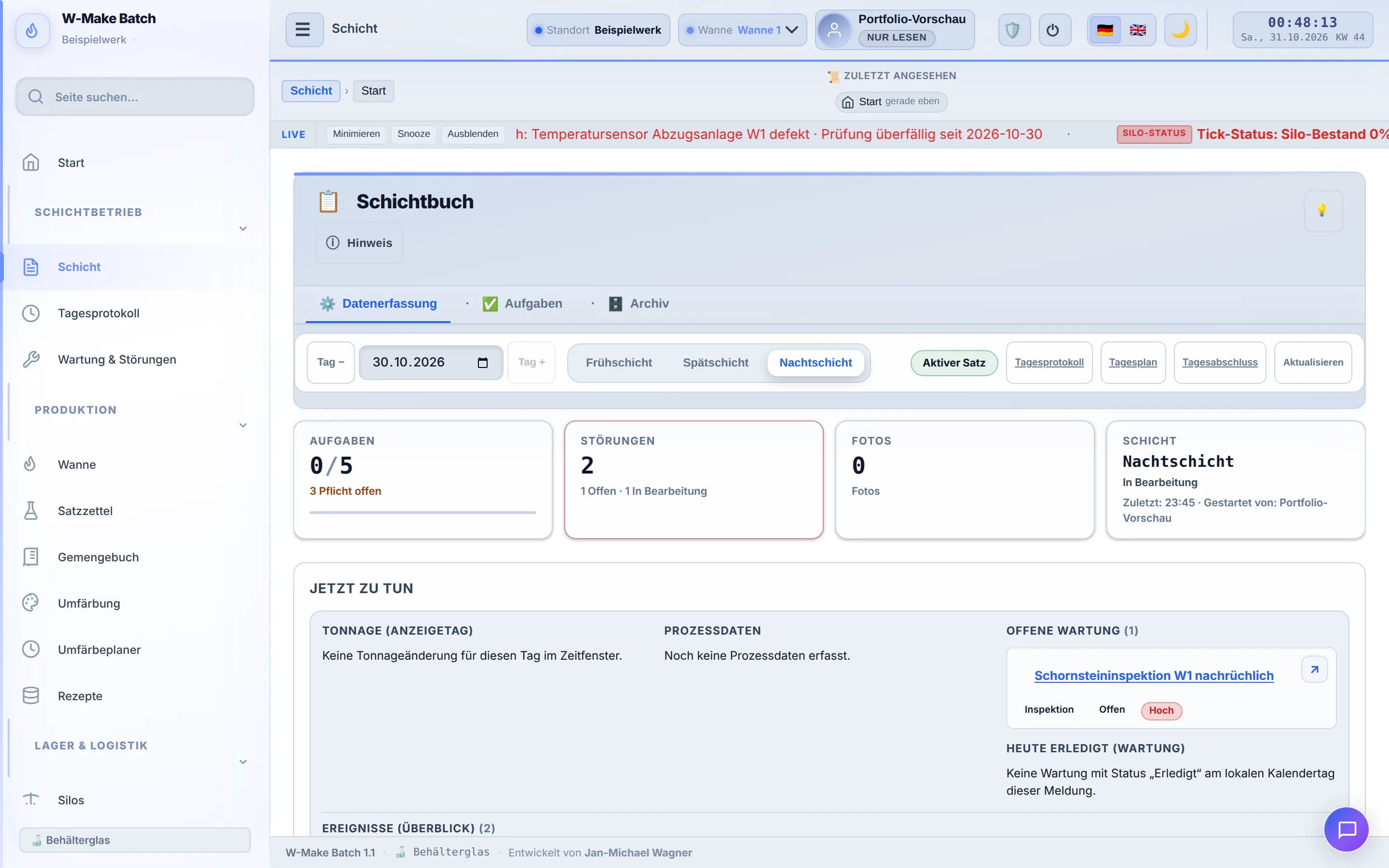
Shift book with faults, maintenance, reports, tasks and photos. Plus shift handover, daily plan, shift and daily logs with actuals and day close.
Furnace rounds, lab values, filter systems, energy, emissions and colour-change planning.
Reports, print and PDF, CSV export for SAP, REST API for machine data. Multiple sites, user roles and an interface in German and English.
Walkthrough
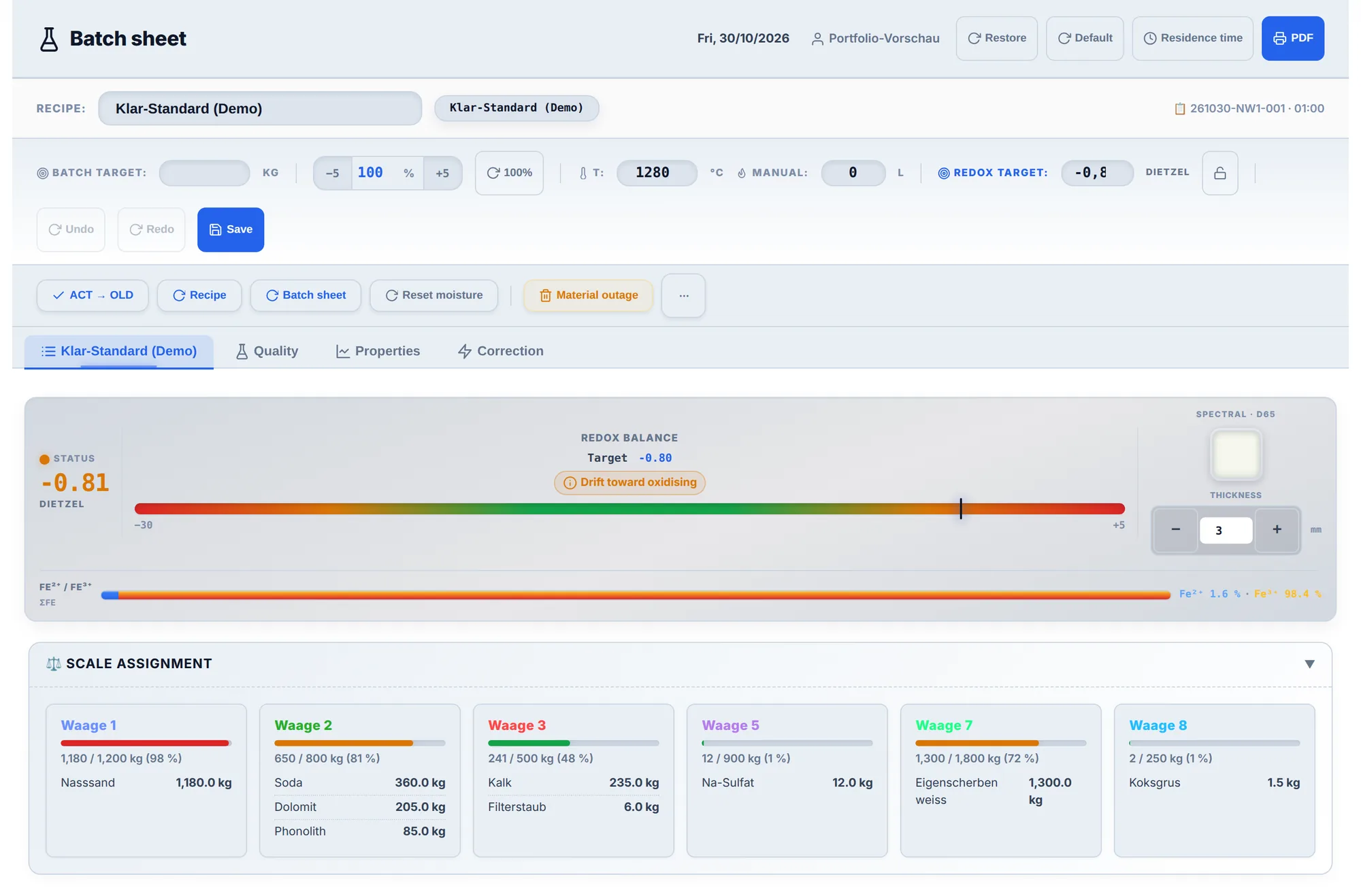
The recipe is taken into the batch sheet. Above it sit batch size, temperature and redox target, below it the load on each scale. A scale close to its limit shows up early.
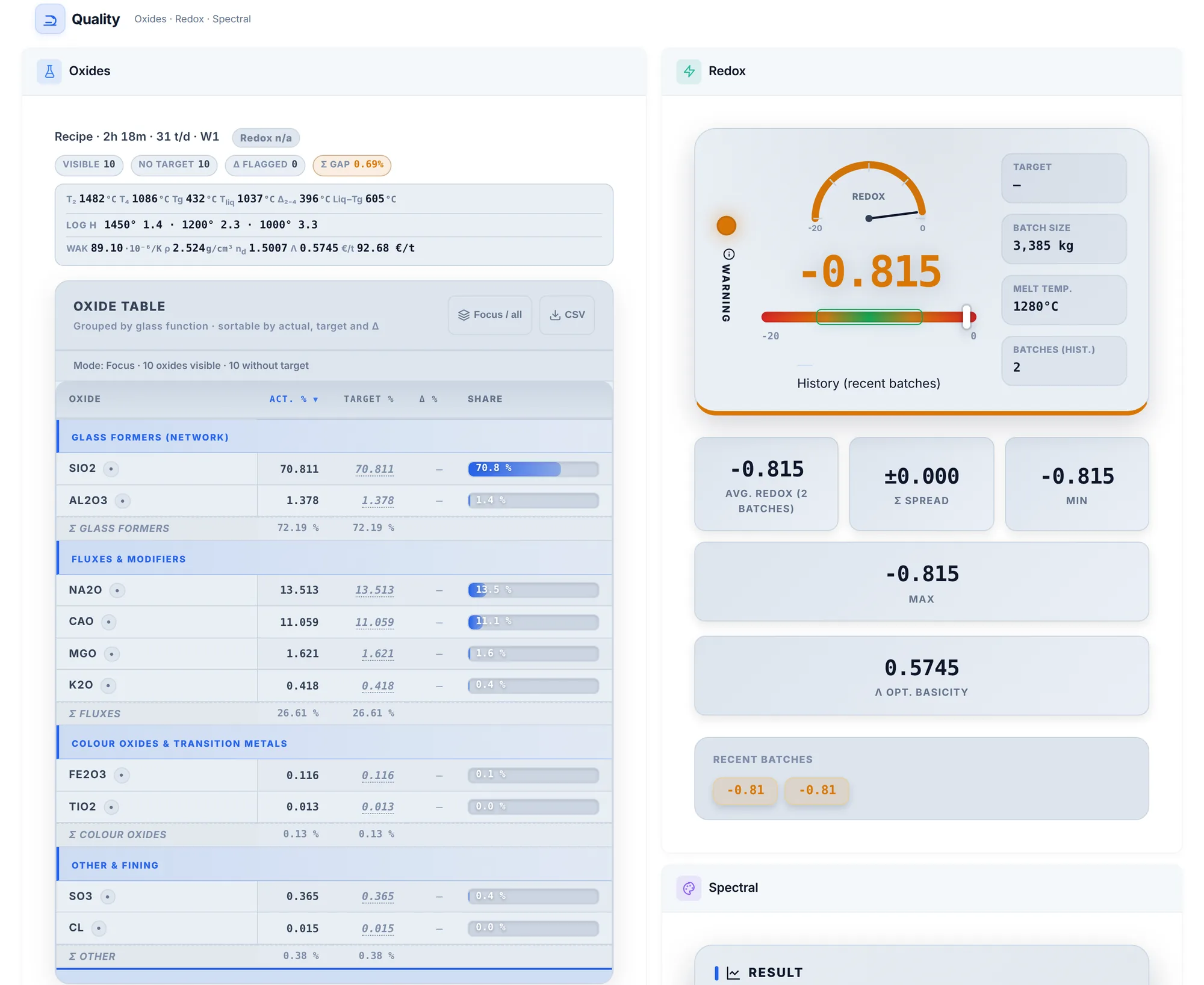
The oxide table compares actual and target, grouped by function in the glass. Next to it are the redox value and the latest batches.
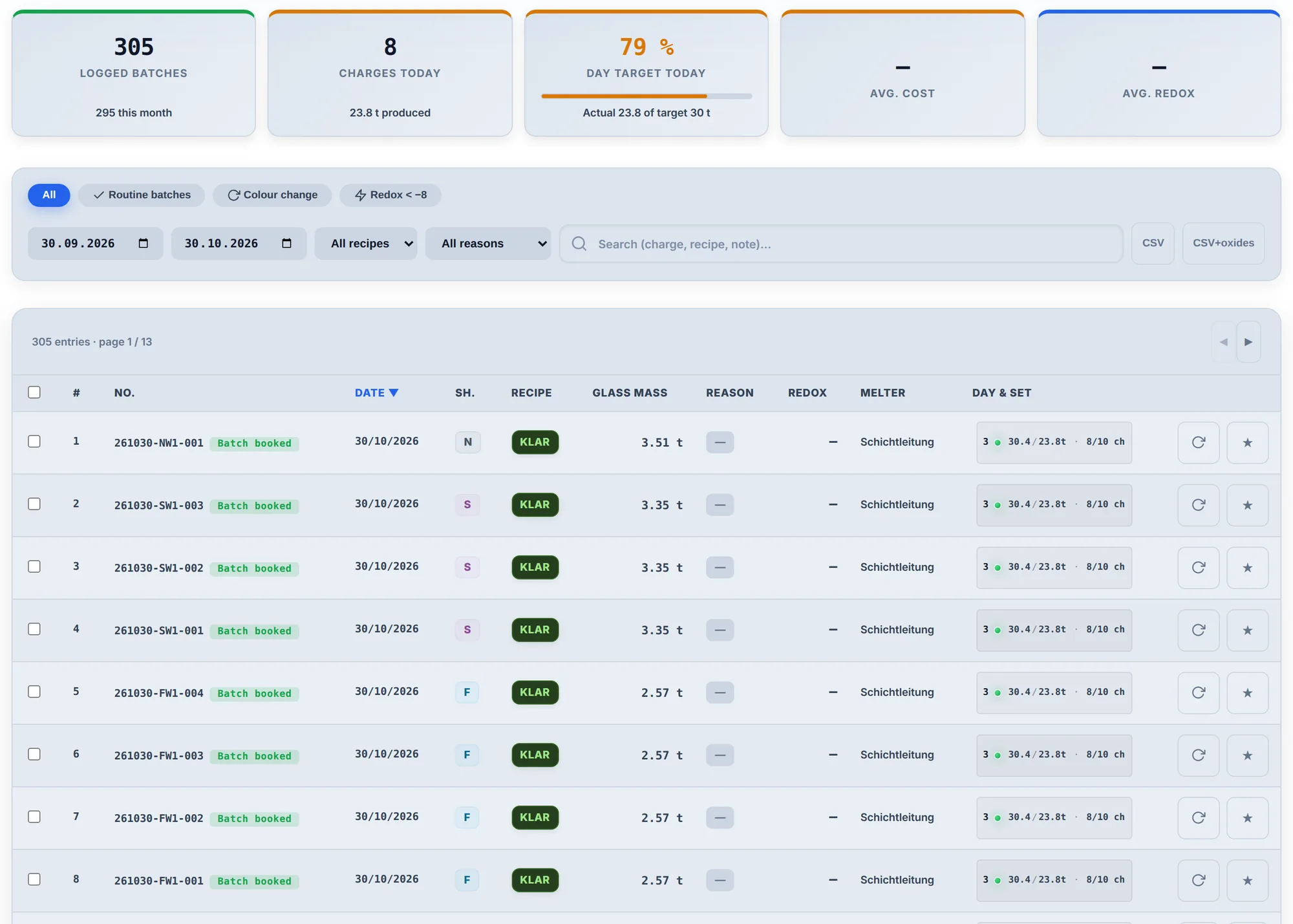
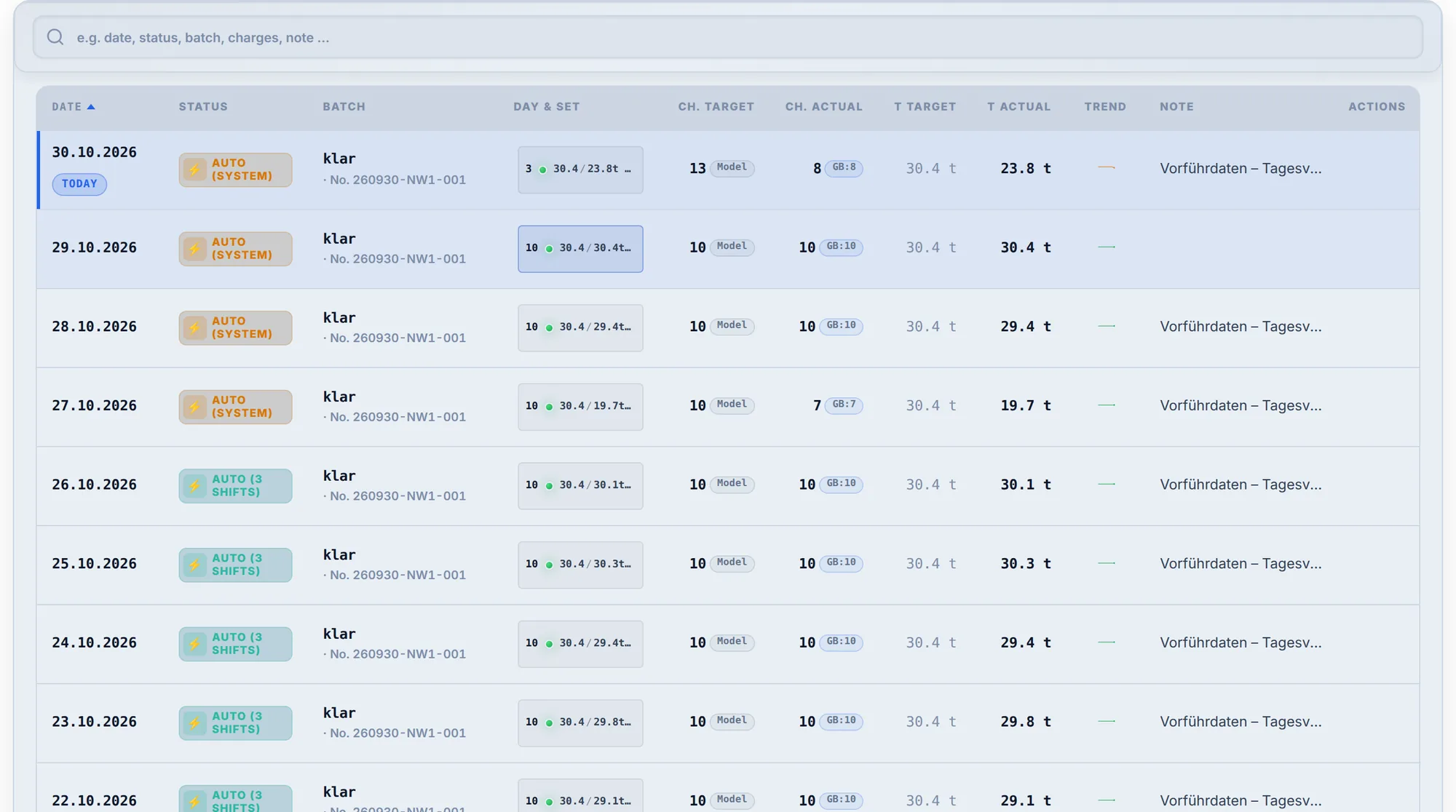
All posted batches are listed with number, shift, recipe and glass mass. Filters and search lead quickly to an entry, and the figures above show progress against the daily target.
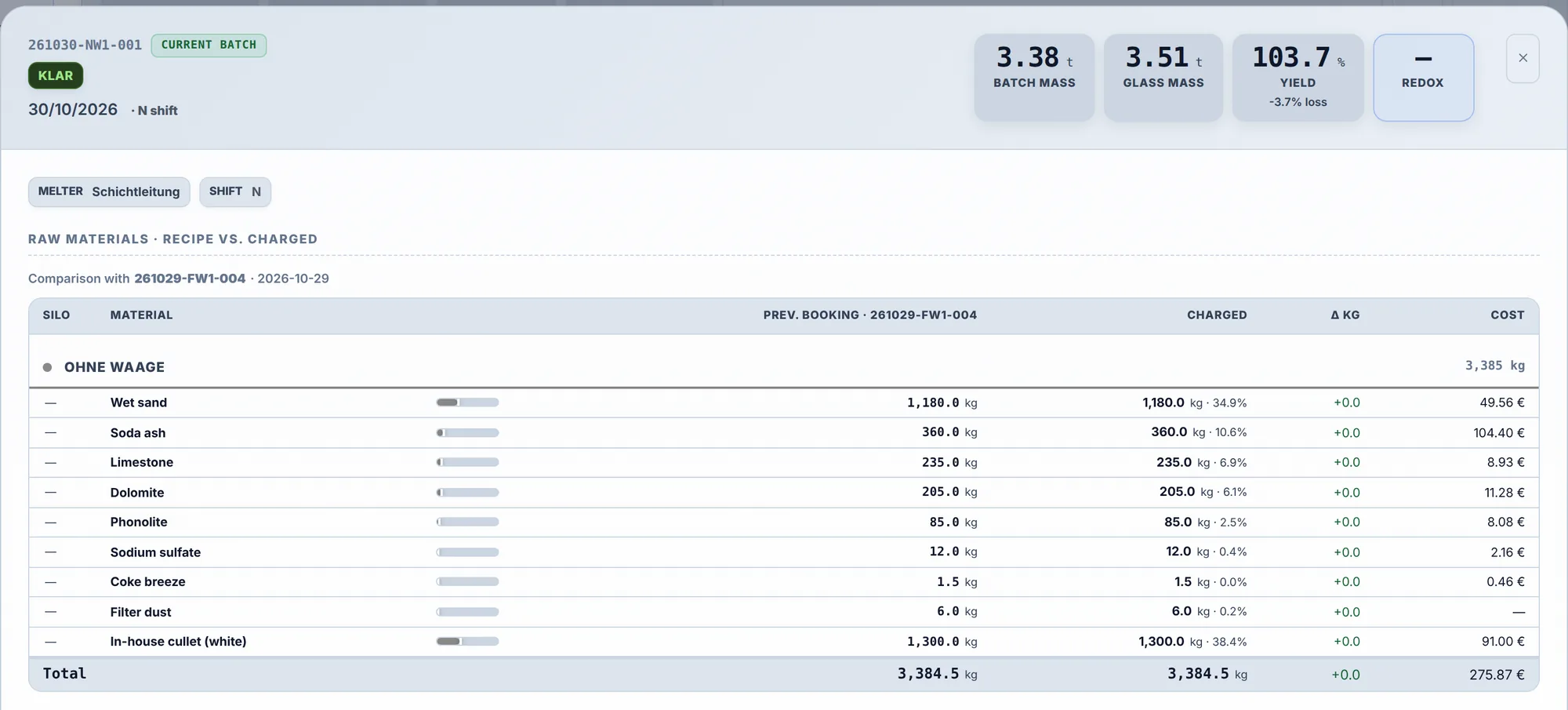
One click shows what was used: for each raw material the quantity, the difference from the previous posting, and the cost.
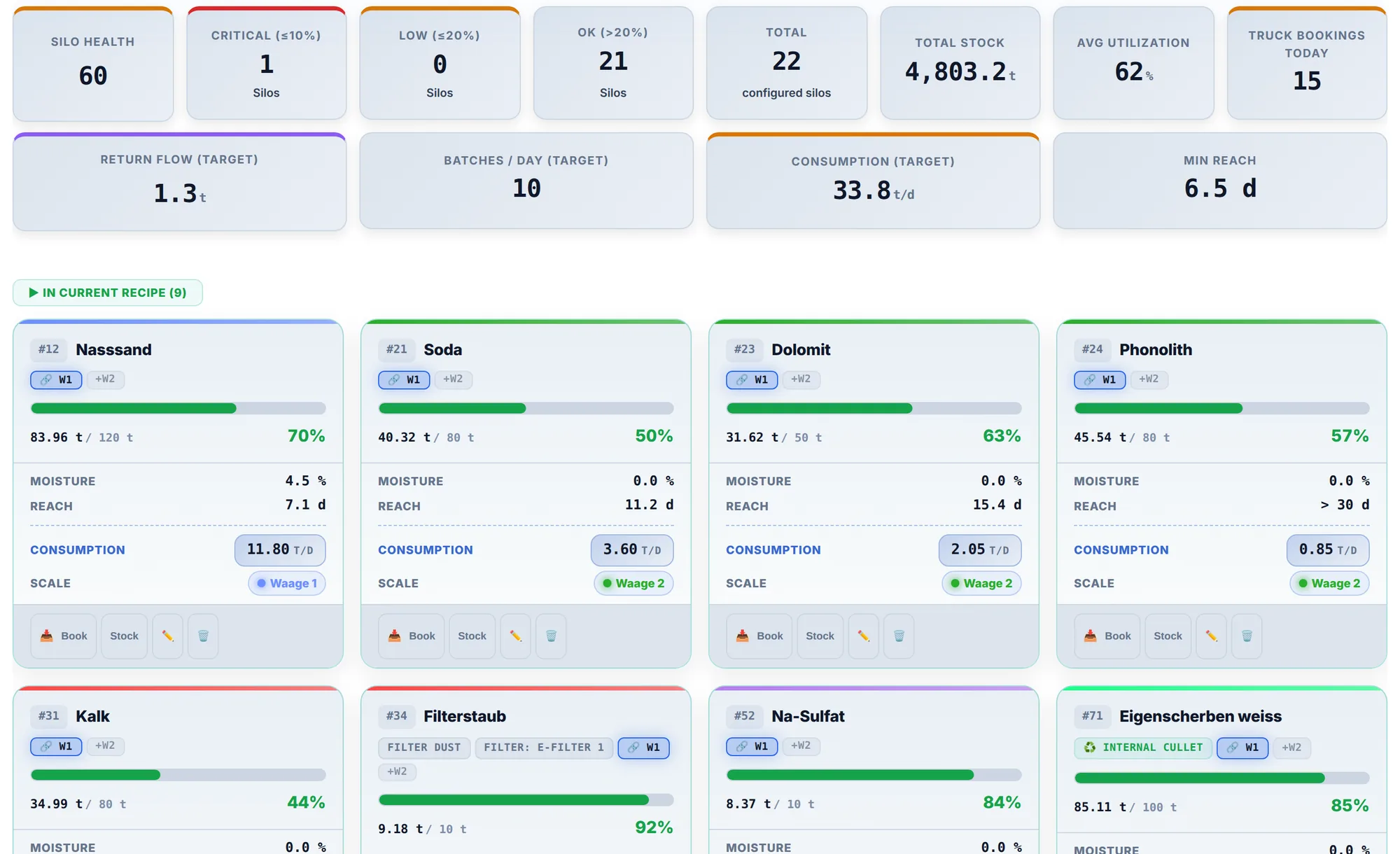
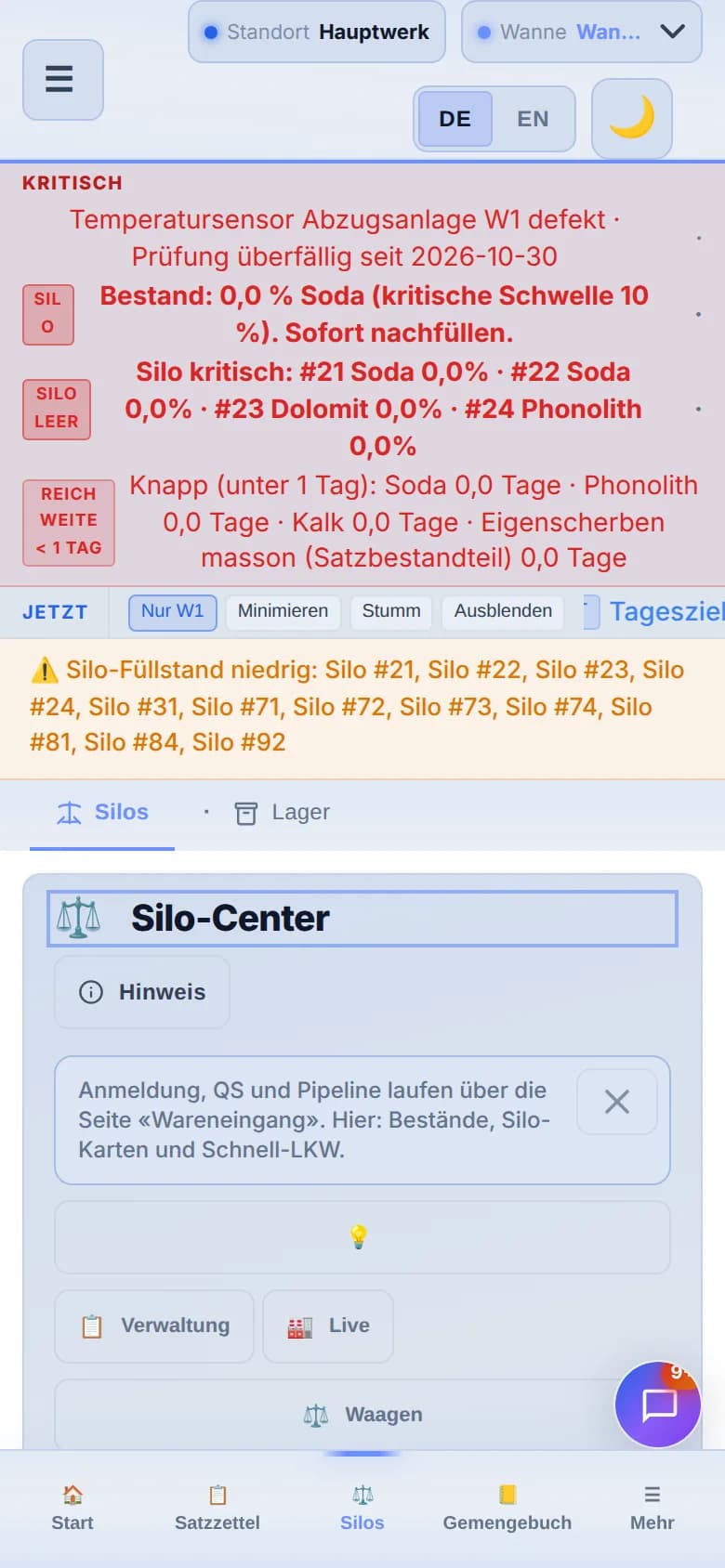
A card for each silo shows level, moisture, daily consumption and days of cover. The overview of all silos sits on top.
The production day sets batches and tonnage against the target. Shift handover and day close sit directly above.
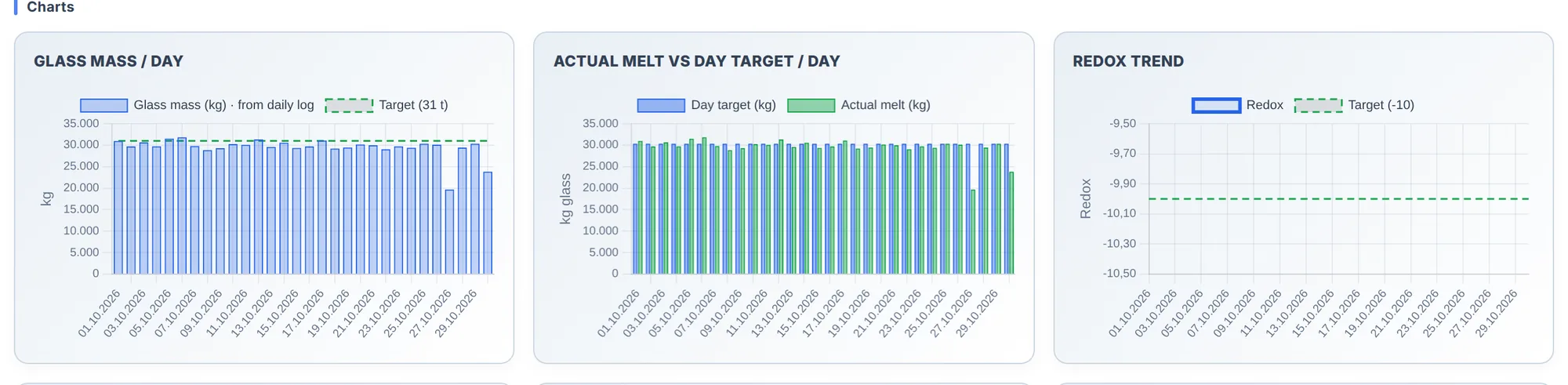
The report shows glass quantity, melt against daily target, and the redox trend. Reports can be exported.
Postings are not deleted. A correction after silo deduction is a reversal, a cancellation or a reconciliation, so the event stays visible.
Batch sheet, batch log and daily log share one data model. Two separate tools at that point would bring back the same retyping as on paper.
Oxide, redox, batch size and cost stay tied to the recipe version and live in their own modules. The interface only displays the figure.
Shift start is set centrally so all stations post to the same production day. The default is 06:00.
Migrations, backups and a repeatable day close are part of the product and planned in from the start.
Each key figure appears only once on a page. The same figure in three places makes the shift ask which one counts.
Quality
Over 1,400 automated checks — unit, API, posting system, i18n, ESLint and Playwright — run on every change before it reaches the demo instance.
The November 2026 posting audit reviewed truck goods receipt, piece and cullet storage, silo overflows, cancellations and the day close. Found gaps are closed and covered by regression tests.
The read-only role is enforced server-side: a demo visitor cannot change anything, whatever the interface tries.
The development log on the homepage shows the real commits — activity is publicly verifiable, not claimed.
A look inside
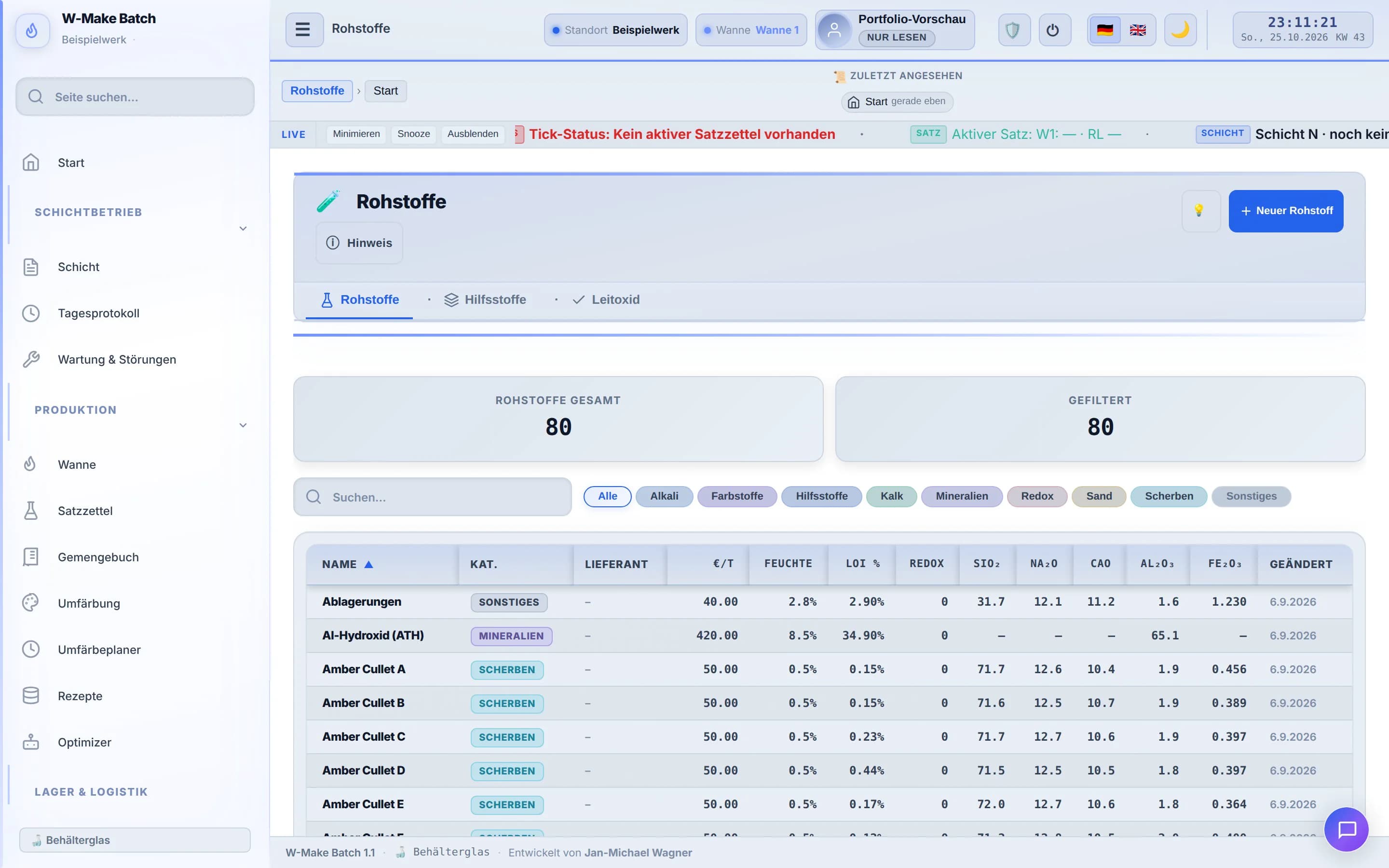
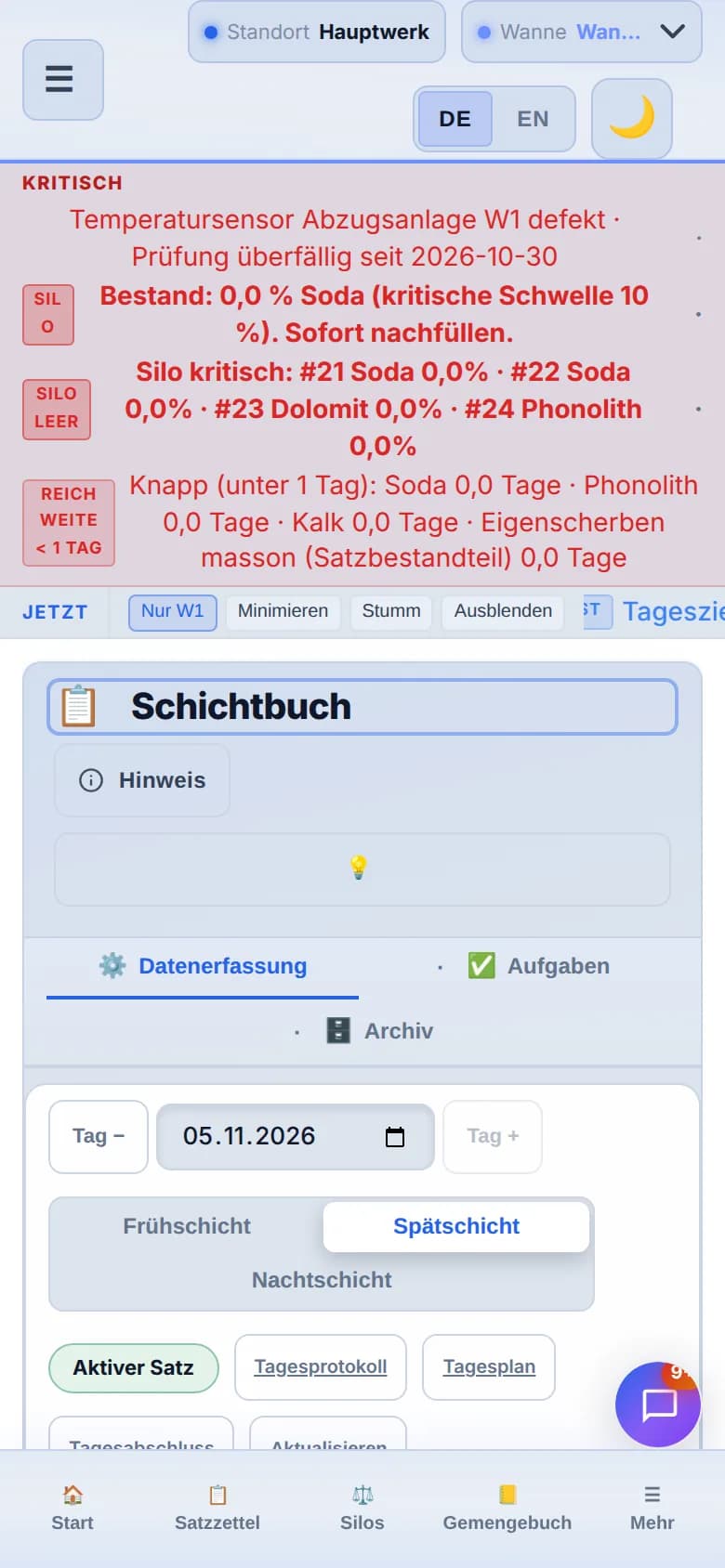
The pictures are from batch.w-make.com. The instance is password-protected; temporary access is available on request.
01
Composition, version, temperature and cost stay linked to later consumption.
02
The order to the scale, generated directly from the valid recipe version.
03
Consumption is deducted from stock automatically.
04
What was weighed stays assigned to batch and recipe version.
05
The day close records what the next shift will find.
What used to be three contradicting numbers in the morning is now a stock with receipts: every posting, correction and reconciliation stays visible, and nobody deletes rows any more.
Overflows — when a scale delivers more than the silo holds — are no longer dropped silently but shown as open items in stock and settled with the next receipt.
The day close is repeatable: target and actual per production day are on record, differences point to the receipt that caused them, and the shift handover happens in the system.
Whatever cannot be undone in the process has to be safeguarded in the data model. A check in the form comes too late once silo and log have been written.
Demo access on request.
First call · 30 minutes · free
A few sentences about the process are enough: what runs in lists or side calculations today, and who works with it. Within two working days you get a reply and a clear view of whether I am the right person for it.
Arrange a callAssess your own process →