Silo deduction
Depending on the setting, consumption comes off stock immediately on posting or on a schedule as production runs. Alternatively, stock levels come from a PLC or an MES.
Batch log · W-Make Batch
A digital batch log records which batch was posted when and with which formula, and deducts the consumption from silo stock. W-Make Batch does this for container-glass furnaces, designed for a pull of 150 to 600 t/d.
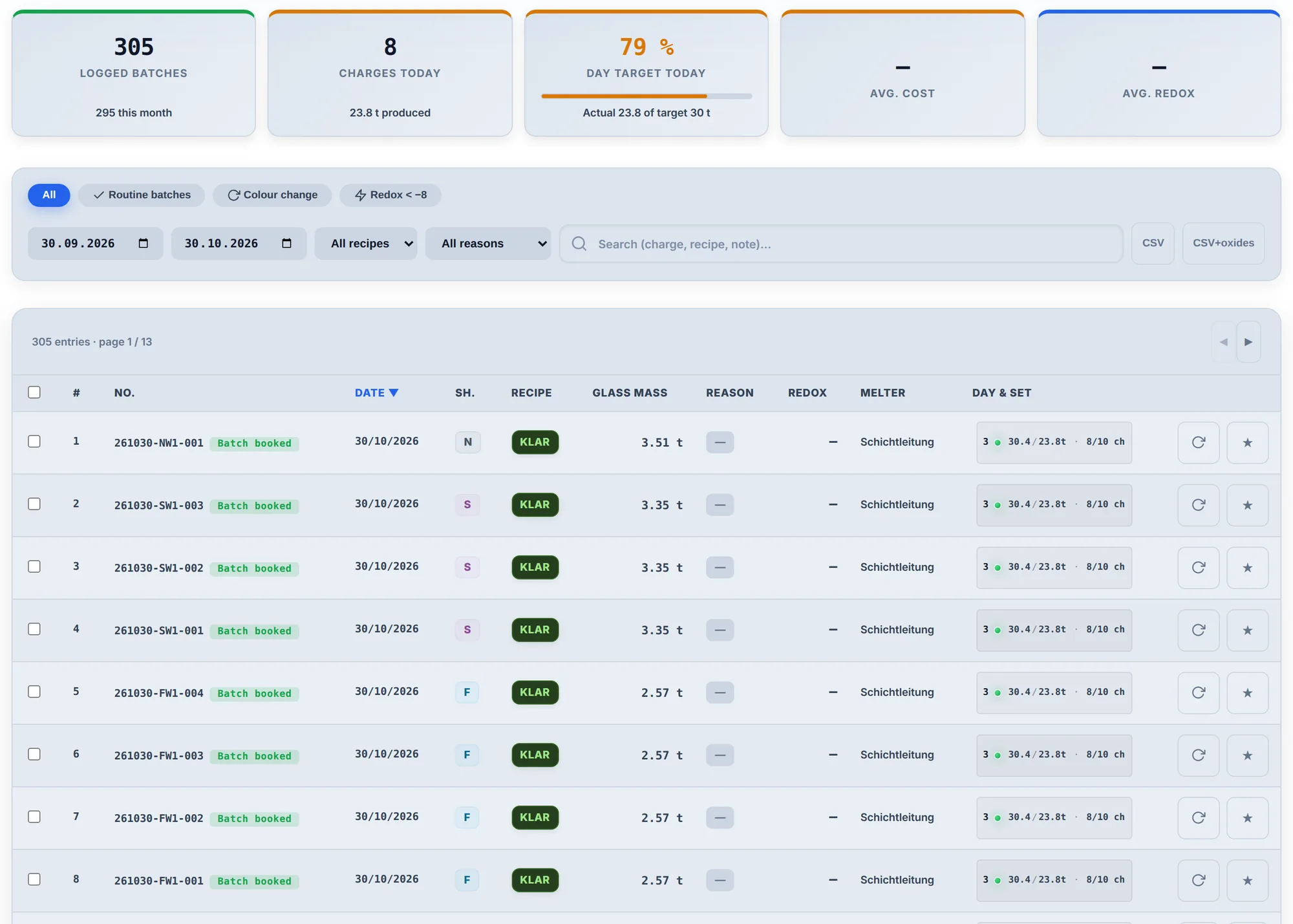
All posted batches are listed with number, shift, recipe and glass mass. Filters and search lead quickly to an entry, and the figures above show progress against the daily target.
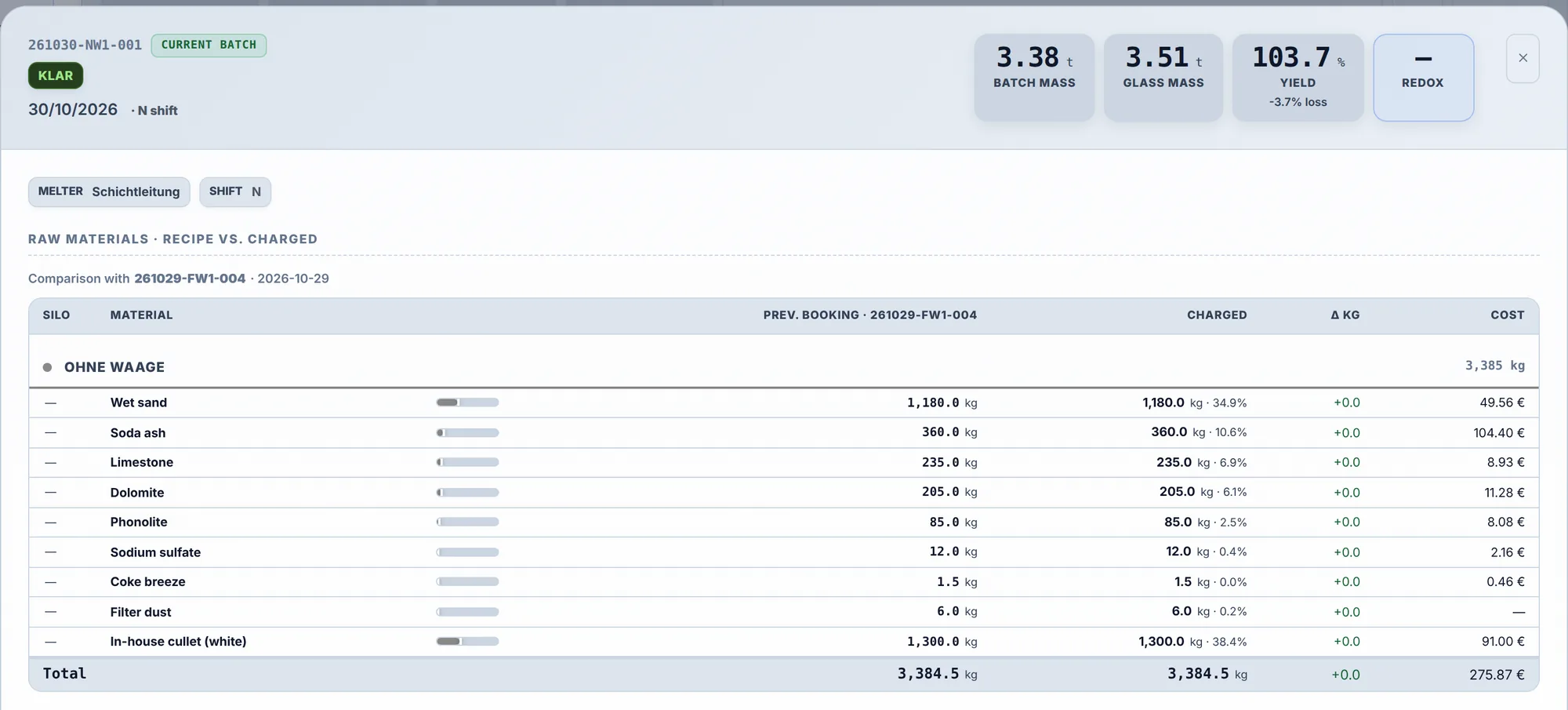
One click shows what was used: for each raw material the quantity, the difference from the previous posting, and the cost.
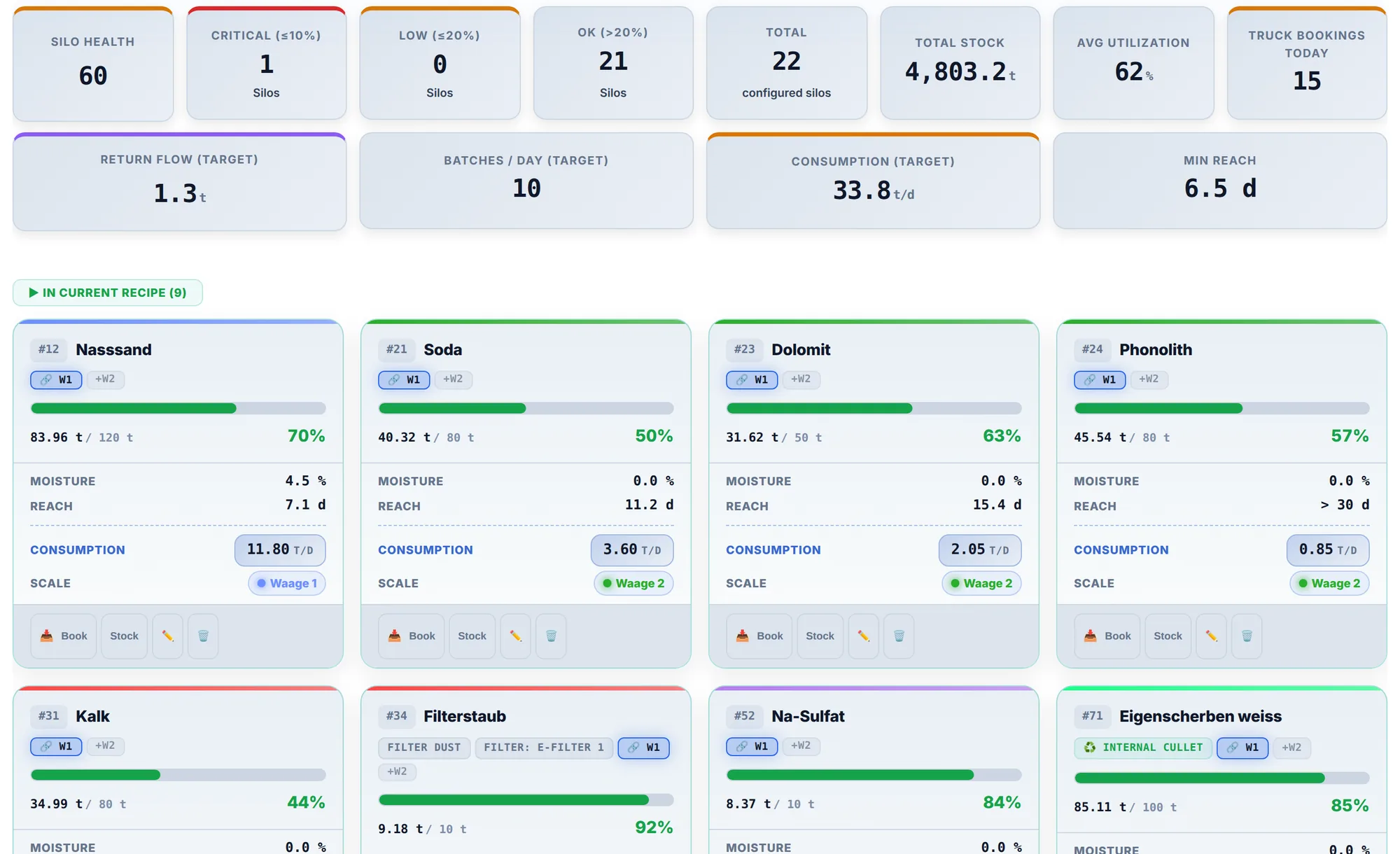
A card for each silo shows level, moisture, daily consumption and days of cover. The overview of all silos sits on top.
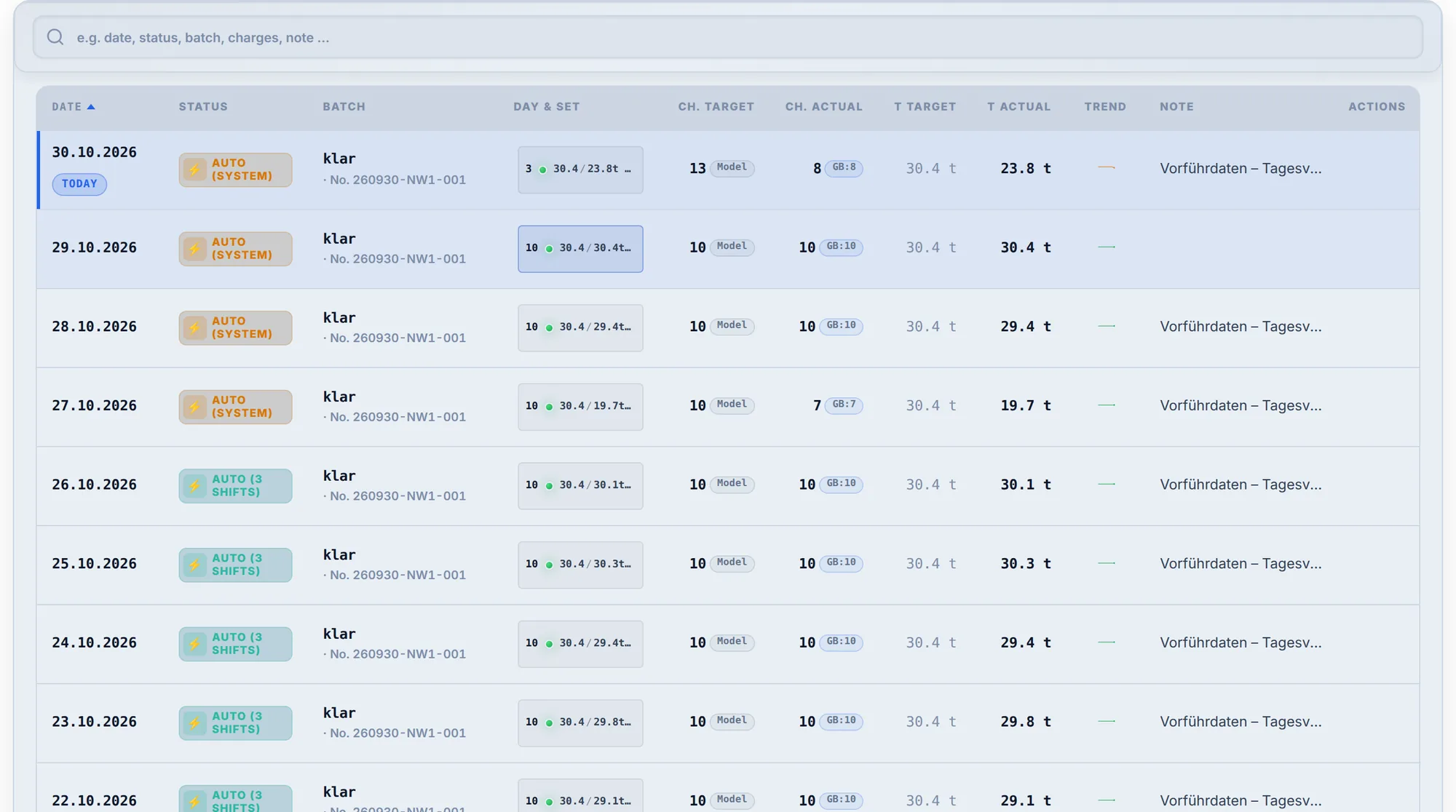
The monthly table sets batches and tonnage per day against the target. The individual day opens from here.
A spreadsheet can list batches. It does not know that a posted batch changes the silo level or that the daily log builds on it. Values are therefore copied by hand, and every list keeps its own version of events.
Then there is correction. In a spreadsheet you overwrite the wrong row, and afterwards nobody can see what was there before. If a silo difference shows up the next morning, it can no longer be matched to any event.
Every entry is a record. On posting, the batch sheet is stored as an unchangeable snapshot, with all ingredients, the glass mass, the target tonnage and the scaling. Later recipe changes do not touch it.
The most recently posted, non-cancelled entry for a furnace defines the active recipe. If there is no new posting the next day, the previous day's recipe keeps running.
The batch log holds the batch postings. The batches actually run come from the daily log, and goods received by truck, pallet or sack go through a separate posting channel. That keeps production and logistics separately traceable.
Depending on the setting, consumption comes off stock immediately on posting or on a schedule as production runs. Alternatively, stock levels come from a PLC or an MES.
Wrong entries are cancelled. The reversal returns the quantity to the silo, and the original entry stays visible.
Posted consumption and the daily log are reconciled per production day. The day begins at the configured shift start, usually 06:00.
Silos and scales work with weight including moisture, the glass calculation with oxide mass. Moisture at deduction is stored too and is available for CO₂ reports.
Each furnace has its own context of silos, postings and logs. Each site keeps its own furnaces, raw materials and recipes.
Reports are available as print and PDF. A CSV export is available for SAP.
W-Make Batch is not a plant control system. Your PLC keeps controlling scales and conveyors. Batches and stock levels can, however, be taken over from an MES or PLC through an API.
A batch log is the running record of the batches posted for a furnace. It shows which composition applied from when and which raw material quantities were planned for it.
No. Corrections go through cancellation or reconciliation. That keeps events traceable and still brings the silo stock back in line.
That depends on how your files are built. Send me an example and I will tell you what can be carried over. Going live in the system starts with a stocktake.
Yes. It can run on your own server, supported by me or by your IT, or by subscription on W-Make servers.
First call · 30 minutes · free
A few sentences about the process are enough: what runs in lists or side calculations today, and who works with it. Within two working days you get a reply and a clear view of whether I am the right person for it.