W-Make Batch
For production. The batch sheet belongs to a furnace, gets posted, and affects silo, batch log and daily log.
Batch sheet · W-Make Batch and W-Make Recipe
The batch sheet is the working document for the next batch, with ingredients, weights, oxides and redox. In W-Make Batch it is created from the recipe and becomes an unchangeable record in the batch log on posting.
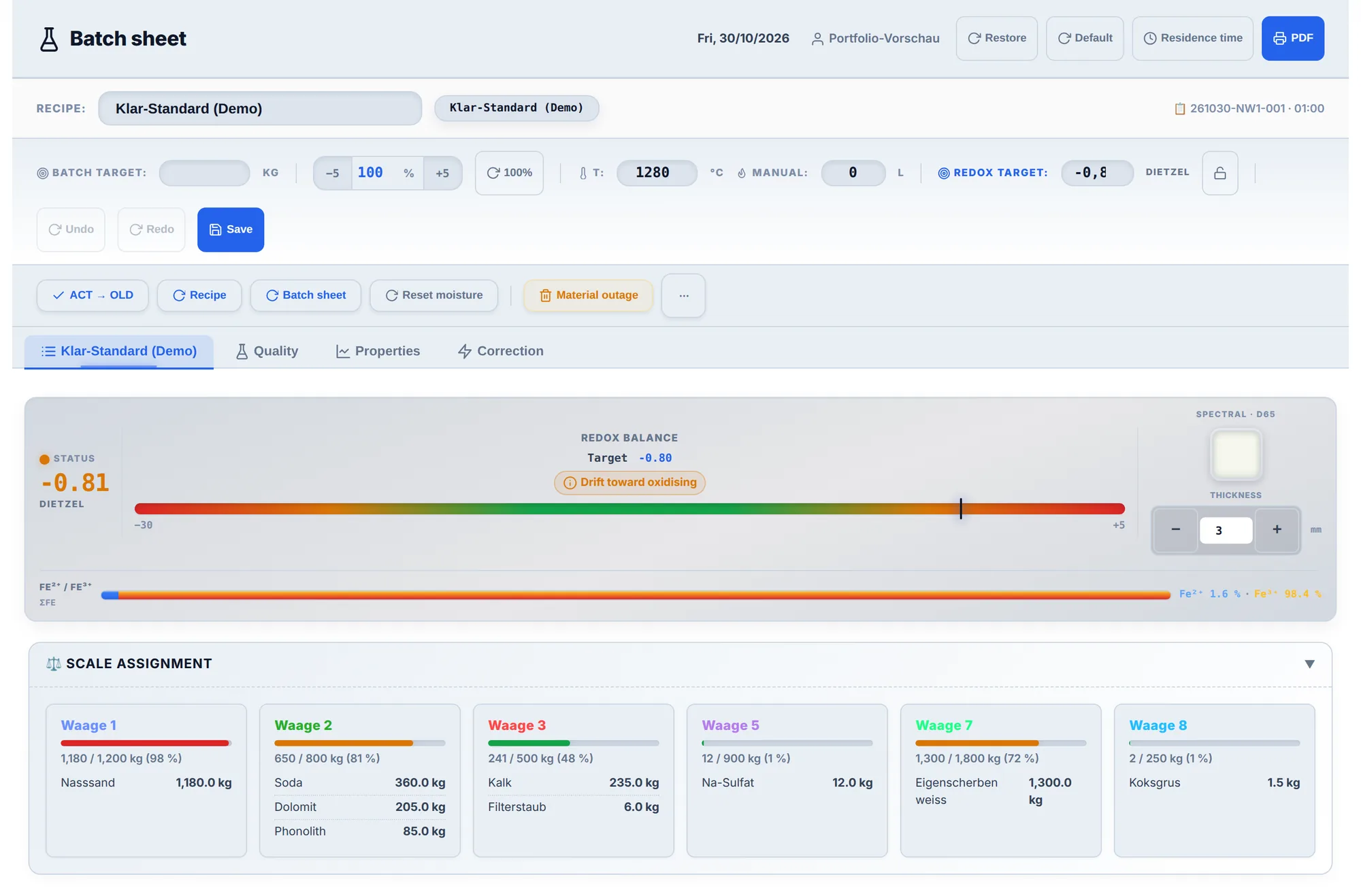
The recipe is taken into the batch sheet. Above it sit batch size, temperature and redox target, below it the load on each scale. A scale close to its limit shows up early.
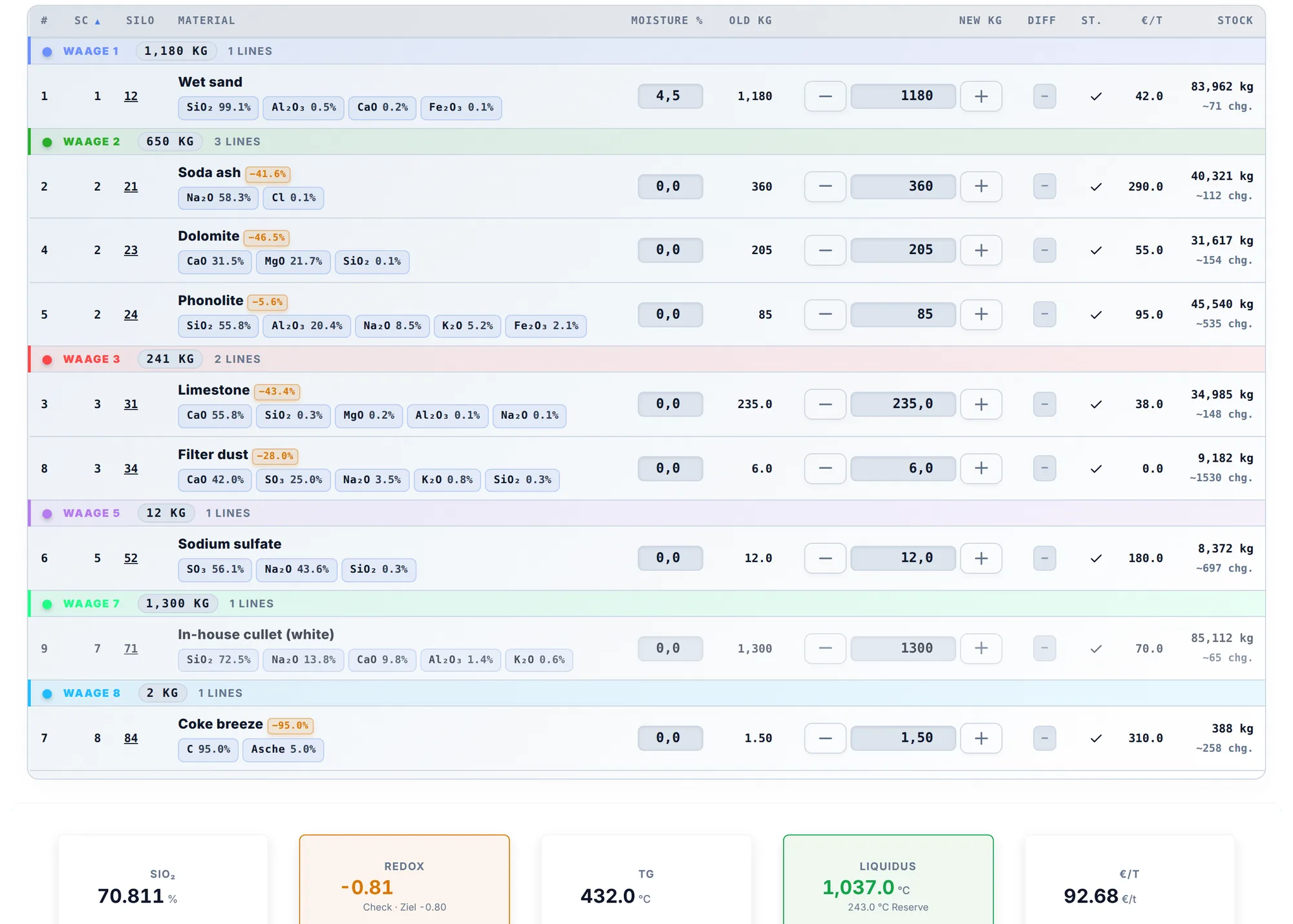
Each row shows silo, moisture, old and new quantity, price and current stock. The raw material's oxides sit directly below.
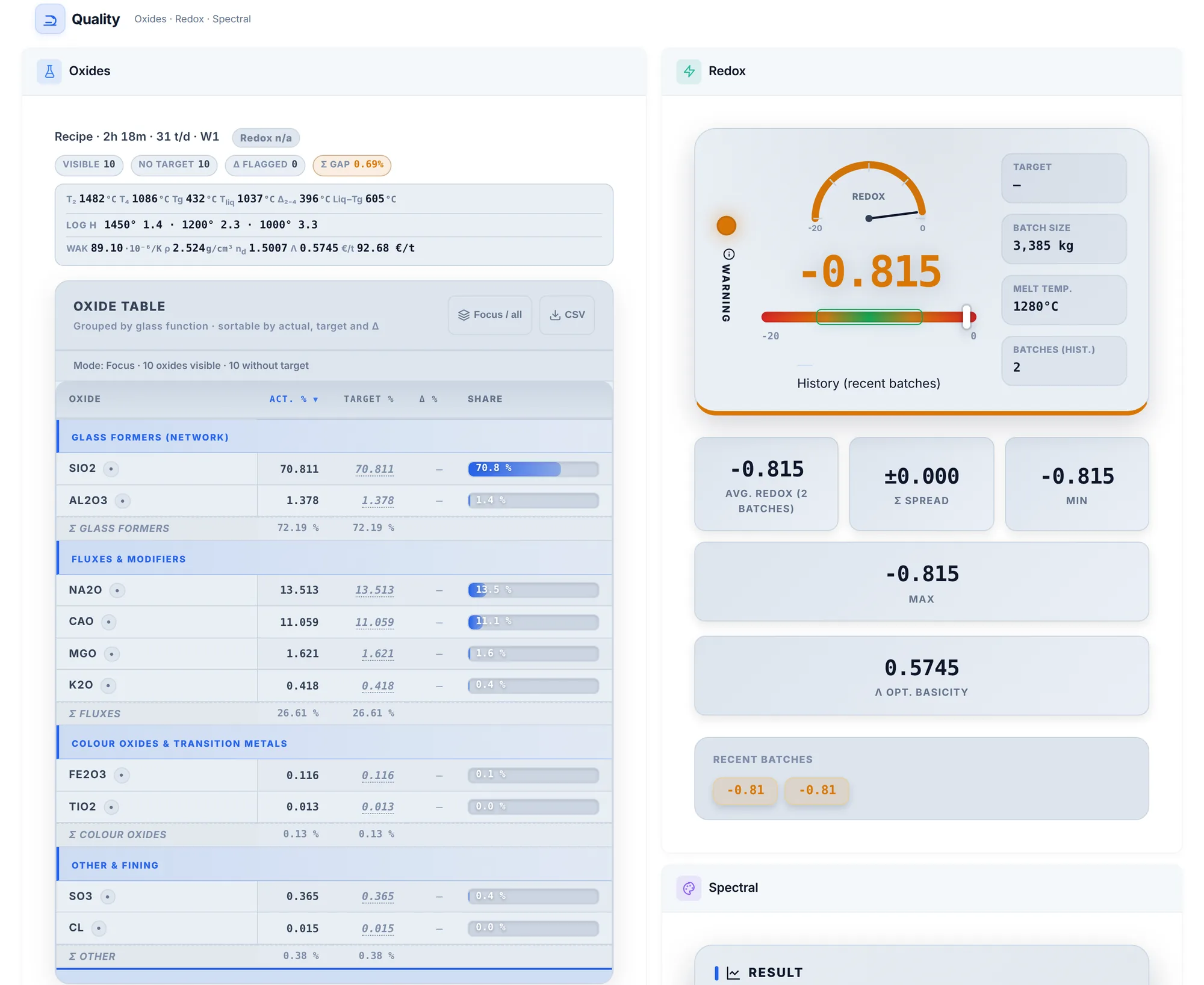
The oxide table compares actual and target, grouped by function in the glass. Next to it are the redox value and the latest batches.
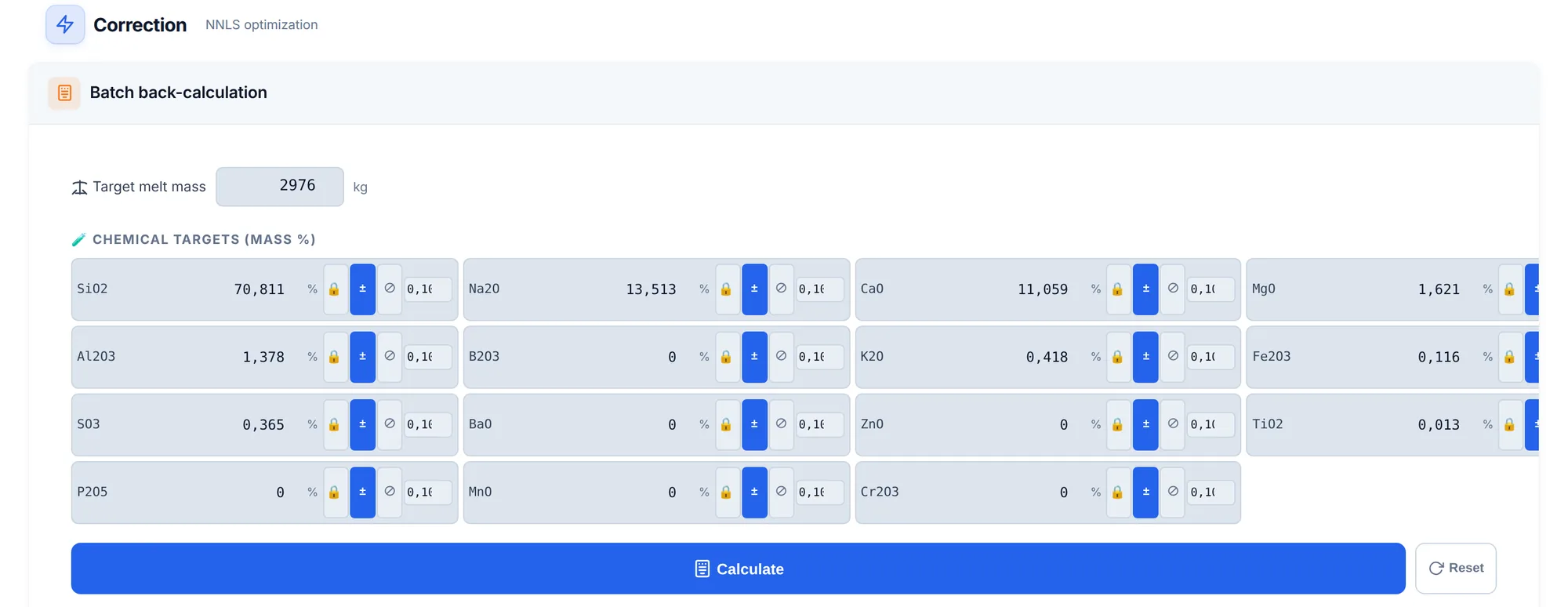
If values drift, you set targets and tolerances per oxide. The calculation then proposes adjusted quantities.
The recipe is the template and stays unchanged during work. The batch sheet is the working document on which the specific batch is put together. The batch log is the record of what was posted.
When the batch sheet is a Word or Excel file on a shared drive, that separation is missing. A copy becomes the new template, nobody can be sure which version is at the scale, and consumption has to be typed into the next list by hand.
The ingredients are taken from the recipe into the working sheet. The recipe itself stays unchanged.
Quantities, moisture and the assignment to silos are set for the specific batch.
Oxides, redox, glass mass and cost are visible right on the batch.
The printed version has signature fields. Posting creates the batch log entry, and the silo deduction follows from it.
For production. The batch sheet belongs to a furnace, gets posted, and affects silo, batch log and daily log.
For the desk. The batch sheet stays a draft and print template, and nothing gets posted. That suits recipe development and plants that only need the calculation.
Print, PDF and Excel with ingredients, quantities, shares, prices and cost, plus an oxide table comparing actual and target.
The scale and its control stay as they are. The application defines and documents what should be weighed. It does not control the plant.
A batch sheet describes one glass batch: which raw materials are weighed in what quantity and which glass composition results. It is also known as a batch ticket or weigh sheet.
Yes. Both applications have a printed version. In W-Make Batch it includes signature fields.
Batches already posted stay as they were. The change applies to new batches.
If silo stock, shifts and day close should be covered too, W-Make Batch. If it is only about recipe, calculation and printout, W-Make Recipe is enough.
First call · 30 minutes · free
A few sentences about the process are enough: what runs in lists or side calculations today, and who works with it. Within two working days you get a reply and a clear view of whether I am the right person for it.